

My Son Is Exactly Like Me, Which Is the Problem
I lose my temper with my kids. There, I’ve said it. I’m not proud of it and I won’t dress it up as passion or high standards, although I do have high standards, and that is part of the problem.

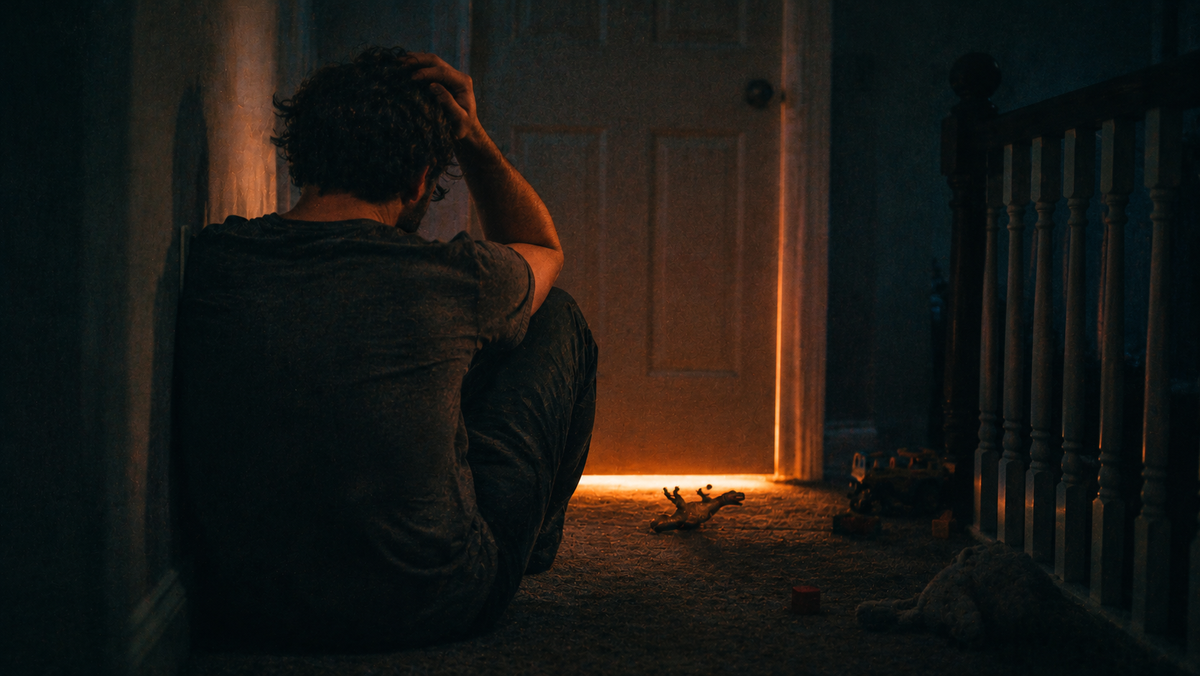
I lose my temper with my kids. There, I’ve said it. I’m not proud of it and I won’t dress it up as passion or high standards, although I do have high standards, and that is part of the problem.
I’m a good dad. I’m also a dad who shouts. For a long time I thought those two things couldn’t live in the same house, so I kept quiet about the second one, even to myself. They can, and they do. Pretending otherwise was just another way of not looking.
I want my children to behave. I want them to listen the first time and react quickly when I ask for something. Most days that is a fantasy, because they’re children, and children are not built to run on my schedule. When I’m rested I can hold it together. When I’m tired, the lid comes off. I hear my own voice change. I watch it happen almost from the outside, like a man watching his own car slide on ice, and I still can’t stop it. Then comes the guilt, which is its own kind of punishment, and which, if I’m honest, is mostly about me.
Of everyone in my house, my son is the one who gets under my skin fastest. I took that to mean he was just being difficult. It took me far too long to see it means he’s familiar. He is exactly like me. When he loves something, he goes in completely. Dinosaurs. He’ll disappear into them for hours, whether he’s playing with them on the floor, reading about them or watching a dinosaur film on the telly. The world vanishes. You can say his name three times and nothing gets through. It isn’t defiance. It’s hyper focus, and I know it intimately, because it’s how I’ve lived my whole life.
I lose myself in work, in projects, in books, or in plain old pondering, and I hate being interrupted. I mean hate it. Someone walks in and says my name and I feel it physically, a small jolt of irritation before I’ve even looked up. I know that feeling very well. I have just never once considered that my son feels it too.
And when I interrupt him, when I tell him to stop, come and eat, put his shoes on, he gets pissed off with me. Properly pissed off. And I get pissed off back. A grown man and a small 5 year old boy, both furious, both convinced they’re the one being treated unfairly.
Look at that for a second. One of us has a fully developed brain, decades of practice at controlling himself and every bit of power in the room. The other is a small child who was somewhere wonderful when I dragged him out of it. And I’m the one who’s more annoyed.
Here is the bit I can’t get past. I don’t have to imagine being dragged out of something I love in the middle of it. I know exactly how I react. I get short, I get sharp, and if I’m honest, I’m not always kind about it. I’m not interrupting a game. I’m interrupting a world. That is exactly what I do to him, several times a week, and then I get angry at the reaction I’d have myself.
I spent twenty years as a behavioural therapist telling people that the thing that irritates you most in someone else is usually something unresolved in you. I didn’t expect to need that sentence at my own kitchen table. So I’ve started asking uncomfortable questions. How much of my anger is about him ignoring me, and how much is about a boy doing, in plain sight, what I have spent years learning to rein in? And how much of my demand for speed and obedience is a standard I could never meet myself? I can’t tell you the answers yet. I can tell you that asking them is a lot less comfortable than blaming a five year old for being five.
There’s another thing, and it’s worth saying plainly. My expectations of my children are high. I tell myself that’s because I want them to do well. Some of it probably is. But some of it is about me. Their behaviour in a shop or at a table or when I ask them to move is, somewhere in my head, a verdict on how I’m doing. A child who doesn’t listen feels like a man who’s failing. That’s a heavy thing to hang on a small child who just wanted to finish the page.
Tiredness doesn’t create the anger, by the way. It just removes the lid. If the anger weren’t already in there, being knackered wouldn’t produce it. That’s useful to know, because it means I can’t blame the day. It also means I can plan for it. Evening is not the time for the big ask. A hard transition at the end of a long day is a fight I’ve set up myself.
Last night is a perfect example. He asked for a play fight. He loves them and so do I. I said yes, but I told him we’d need to do it early in the evening, because I was tired. That was me planning for my own limits, which is exactly what I’m supposed to do. Then he got lost playing with his sister, and then lost in a game on the iPad, the way he does, and early evening came and went. Right before bed he turned up and asked for the play fight. I said no. It was too late, and I was done.
He got pissed off and called me a liar. That stung, because I had said yes, and from where he stood a man had promised something and then taken it back. It made me angry, and almost straight away it made me feel terrible, which is a nasty combination to be carrying at bedtime. Then he called me a silly name, and we ended up in a proper row, right before bed. Not ideal.
Here is what I can’t ignore about that night. I wasn’t wrong to say no. But he wasn’t entirely wrong either. And the reason the evening slipped away is the reason I’m writing this: he was lost in something he loved. He was doing precisely what I do. It just happened at the wrong time for me.
Then there’s afterwards. The quiet in the house when it’s over. The sick feeling. I used to think that feeling was proof I was a decent person, that my guilt showed I cared. It doesn’t. Guilt is just me staring at myself. It doesn’t help him at all.
So here is what I try, and I don’t always manage it. I give warning, because warning is exactly what I’d want. I get down to his level and take an interest in what he’s doing before I end it. I’d rather a child came out of a world because someone visited it than because someone demolished it. And when I get it wrong, which I do, I go back and apologise. Not “sorry, but you need to listen”. Just sorry, and what I got wrong. Guilt keeps the focus on me. Repair is for him. It shows him that a grown man can lose his temper, own it, and still be safe to love.
I think about what he’s actually learning from me. Not from what I say, but from what I do when I’m tired and cornered. If he sees a man who explodes and then pretends it didn’t happen, that’s the template. If he sees a man who explodes, stops, comes back and says “that was me, not you”, that’s a different template. Both are lessons. I’m only choosing which one.
My son is going to be a lot like me. The only real question is which version of me he gets to copy.
Get the next one in your inbox.
Free. One email for each new post. Unsubscribe whenever you like.