

Psilocybin Helped Me Quit Drinking. That Isn't Proof.
I've used psilocybin many times in the past. And it was psychedelic therapy at legal retreats abroad, with professional guides, that finally helped me put the drink down and quiet my anxiety.

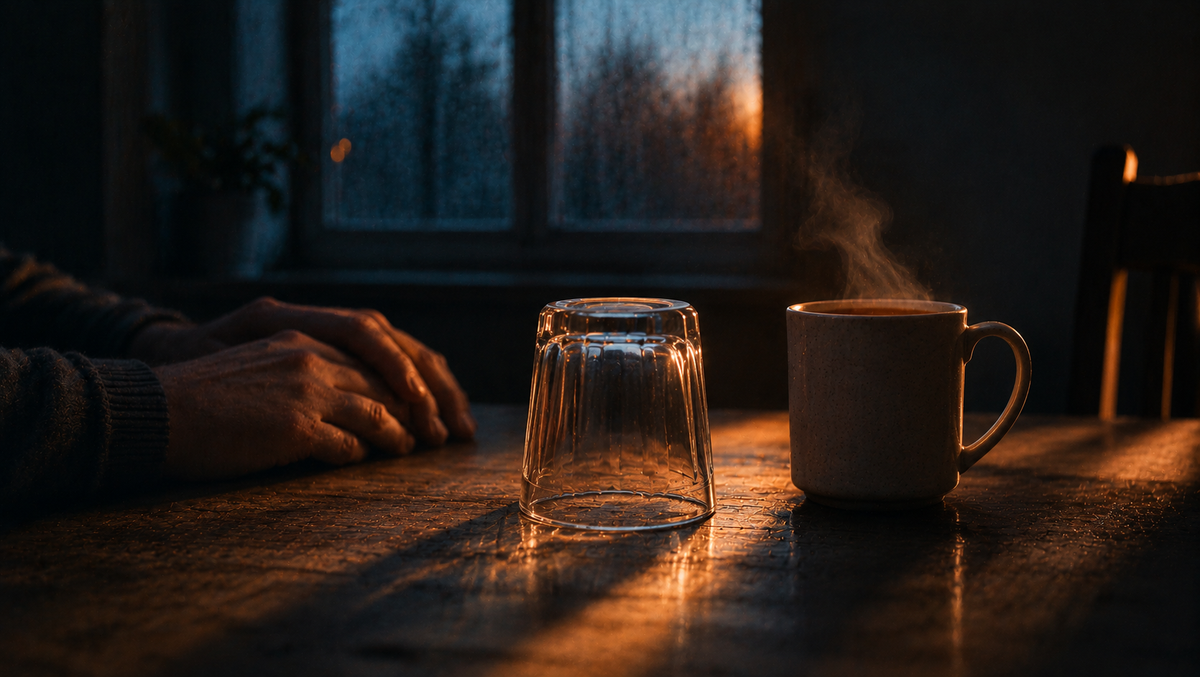
I've used psilocybin many times in the past. And it was psychedelic therapy at legal retreats abroad, with professional guides, that finally helped me put the drink down and quiet my anxiety.
When I say sober, I mean alcohol. That was the major issue, and I've been open for years about using psychedelics to get there.
Here's the part I'll keep saying: it worked for me, and that proves nothing about you.
I've written more than once about men who sell their story as a system. "It worked for me" is the first line of every course and the last line of every refund argument. So if I'm going to tell you about psilocybin, I have to hold myself to the same standard. A believer will always find evidence. My Verifier is as good at that as anyone's.
So let's start with the evidence, not the story.
The race to the first approved psilocybin medicine has just entered its final stretch. On 2 November, the Usona Institute was reported to have completed its application to the US regulator for psilocybin in major depression. On 3 November, Compass Pathways, which is targeting treatment resistant depression, said it would file within two weeks. Both hold priority vouchers designed to produce a decision in about two months, so an answer could come late this year or early next.
The trials behind it are real, but less dramatic than the headlines. In Compass's two late stage trials, a high dose cut depression scores by between three and a half and four points more than the control at six weeks. One analysis called those modest effects, and pointed out that the company counted a 25 per cent drop in symptoms as a meaningful response, half the bar usually used for antidepressants. Serious adverse events ran at 2 to 5 per cent.
On drinking, the best trial I know of is smaller. In a study of 93 adults with alcohol dependence, everyone got 12 weeks of talking therapy plus two medication sessions. Those given psilocybin drank heavily on 9.7 per cent of days, against 23.6 per cent for those given an antihistamine used as a placebo. That's a big gap. It's also one trial, and people with major psychiatric conditions weren't allowed in.
Notice something about that study. Nobody got a pill and a pat on the back. They got weeks of therapy wrapped around two sessions. That matches what happened to me. The substance opened a door. The professionals made sure I didn't wander off in the wrong direction, and the work afterwards is what kept me walking. I wrote a few days ago that integration is the part nobody talks about. This is why.
It's also how this fits with everything else I've told you. Structure and routine kept me sober day to day. I prayed when I couldn't bring myself to ask a person. And at the retreats, professionals supported me because that was their job. I never once said the words "help me". Recovery is rarely one thing. Mine wasn't.
Now here's what worries me. While some companies race to get psilocybin approved, some researchers are working out how to get rid of the trip. Last month, a team at UC Santa Cruz reported that in mice, psilocybin's rewiring effect didn't depend on the brain cells behind the head twitch that stands in for a trip in rodents. The senior author talked about future drugs delivering the benefits "while eliminating hallucinogenic side effects".
Side effects. For a lot of people, me included, that so called side effect was the point. Whether it actually is the point is still an open scientific question. One camp argues the experience itself drives the lasting change. Another argues the brain changes do the work and the experience is along for the ride. Both sides agree it isn't settled. I know which way I lean. I'd still rather say "we don't know" than pretend.
And it isn't for everyone. In a survey of nearly 2,000 people who'd had a bad experience on mushrooms, 39 per cent ranked it among the five most difficult experiences of their lives, and about one in ten said they'd put themselves or others at risk of physical harm. The alcohol trial screened out people with serious psychiatric conditions. In Oregon's regulated programme, the four people in one study who had serious reactions were all first timers who had come looking for help with their mental health. That one stays with me. The people most desperate for it can be the people most at risk from it.
Retreats aren't a magic answer either. Research on dozens of them found real risks of physical, psychological and interpersonal harm, vague roles for medical staff, and in some cases staff taking psychedelics alongside their guests. I was lucky with the people I did the retreats with. Plenty of people aren't. Luck isn't a safety system.
Which brings me to the law. In the UK, psilocybin is Class A. Possession can carry up to seven years in prison, and the government hasn't moved it out of the most restricted category, even for research, though a pilot to ease research licensing has been backed in principle. So a British man who wants what I had can join a trial, get on a plane, or break the law.
I think that's wrong. I'd like to see regulated adult access, done properly, and personal use decriminalised. Proper regulation means nobody has to gamble on finding the right people to guide them. Oregon already runs licensed psilocybin centres for adults. A study of 346 people found serious reactions in about 1 per cent, and the share with moderate to severe depression symptoms fell from 42 per cent to 17 per cent at three months.
The other side has a real case, and you should hear it. That Oregon study had no control group, and a third of people said the cost was a financial strain. Australia let psychiatrists prescribe psilocybin in 2023, and more than a year later only nine had been approved, with treatment costing more than AU$24,000. Oregon also rolled back its wider decriminalisation of drug possession in 2024. That covered hard drugs, not mushrooms, but it shows how fast public patience runs out when reform goes badly. I think the case for change is stronger than the case against. You might not. That's a fair fight.
So here's the one thing. If you're struggling with drink or anxiety, talk to a professional first. A real one. Don't try to treat yourself with something a mate sold you. If you're curious about psychedelics, read what the trials actually involved, look hard at the risks, and know the law where you live. Then make your own call.
Don't take my word for it. That's the whole point. It worked for me. That isn't proof. It's a reason to look properly.
If you're worried about your drinking, Drinkline is free and confidential on 0300 123 1110.
Get the next one in your inbox.
Free. One email for each new post. Unsubscribe whenever you like.