

We Didn't Raise a Weak Generation. We Raised an Untrained One.
Kids today are snowflakes. Everyone's triggered by everything. In my day we just got on with it.

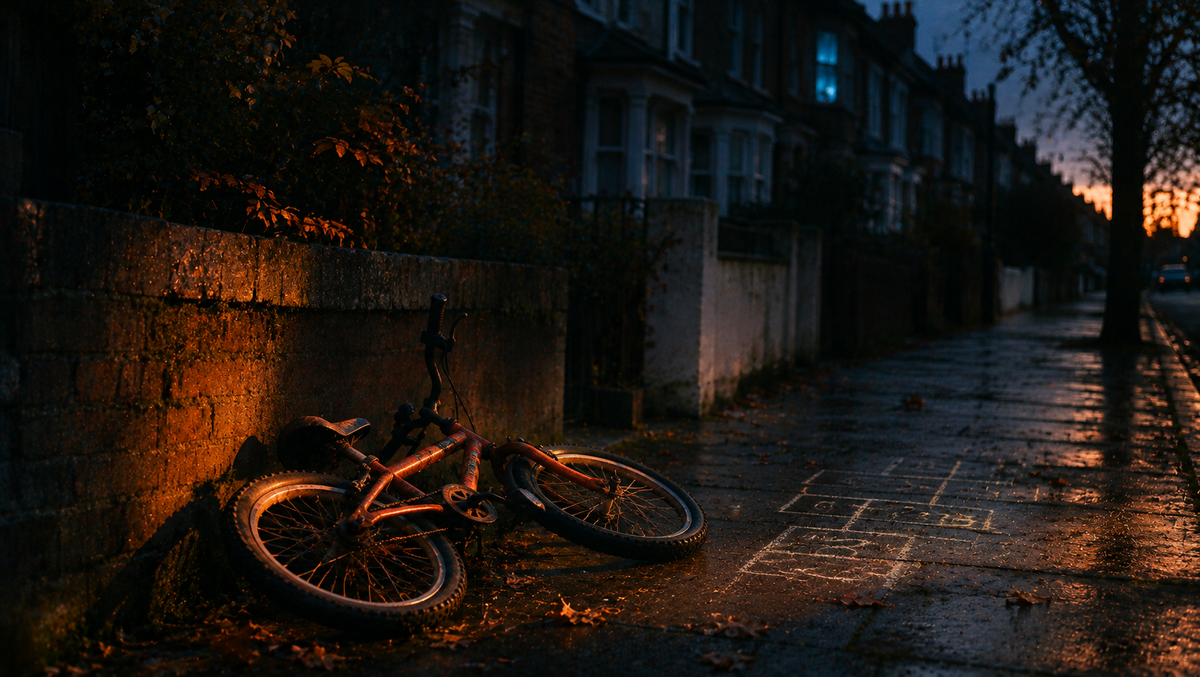
There's a version of this article that writes itself. Kids today are snowflakes. Everyone's triggered by everything. In my day we just got on with it. Cue nodding from every man over forty, hit share, job done.
I'm not writing that one. Partly because it's lazy. Mostly because it lets the people who actually built this mess off the hook. Us.
But I'm not writing the other version either. The one where every wobble is a sacred wound and the only acceptable response is a soft voice and a referral. That one is doing damage too.
Start with the numbers, because they're grim. In 2023, one in five children aged eight to 16 in England had a probable mental disorder, up from one in eight in 2017. Among young women aged 17 to 19, eating disorders were identified in roughly one in five. Lifetime self harm across adults in England has more than quadrupled since 2000, and nearly a third of women aged 16 to 24 now say they have hurt themselves at some point.
Some of that headline figure may be the relabelling I'm about to get to. The self harm and eating disorder numbers are much harder to explain away. Those aren't young people being dramatic. Those are young people in real trouble. If someone you love is restricting food or hurting themselves, this is not the moment for a lecture on grit. It's the moment to get them proper help. I'll come back to that.
So two things are true at once. Serious suffering has genuinely gone up. And a lot of ordinary life is being relabelled as illness. Confuse the two and you fail both groups.
Here's the second part. In 2016 a Melbourne psychologist called Nick Haslam described something he named concept creep. Words like trauma, abuse, bullying and mental disorder have steadily stretched to cover milder and milder experiences. He warned that this risks turning everyday life into pathology. Trauma used to mean the car crash. Now it can mean the group chat.
Two psychologists, Lucy Foulkes and Jack Andrews, pushed the idea further with what they call the prevalence inflation hypothesis. Awareness campaigns do real good, they say, because people who were suffering in silence finally get recognised. But some people also start reading normal, passing distress as a disorder, and once you believe you have one, you can start living like it. It's still a hypothesis being tested, not settled fact. But anyone who has spent long enough inside their own head will recognise the mechanism.
I call it the Perceiver and the Verifier. The Perceiver writes the story: I'm anxious, I'm fragile, I can't cope with this. The Verifier goes out and finds the proof. Hand a sixteen year old a clinical label for a bad week and you've given the Verifier a job for life.
Then there's the trigger warning, the great symbol of our age. A 2023 review pooled every experiment it could find and found warnings didn't reduce distress. They didn't even stop people looking. What they did do, reliably, was make people more anxious before the thing they were being warned about. We built a safety device that produces the feeling it was designed to prevent. Very on brand for the times.
Now the part that's on the adults.
Psychologists Peter Gray, David Lancy and David Bjorklund pulled together decades of evidence and found that children's freedom to play, roam and do things without adults managing them has collapsed since the 1960s. Over the same decades, young people's mental health went downhill. Their argument is that independent activity is how children build the capacity to cope with stress. They don't claim it's the only cause. They do think it's a big one.
And before anyone says that's an American thing, it isn't. In 1971, 86 per cent of English primary school children were allowed to make their own way home from school. By 2010 it was 25 per cent. This summer the British Children's Play Survey found children are now nearly 11 before they play outside without an adult, more than a year older than their parents were. More than half of parents let their kids play out alone later than they did themselves. Street play averages under 25 minutes a week. And the same researchers link more adventurous outdoor play to fewer symptoms of anxiety and depression in primary age children.
Think about what that means. Resilience isn't a personality trait you're born with. It's a skill, and skills need reps. You learn you can survive being lost by getting a bit lost. You learn you can survive rejection by being rejected and still being alive on Tuesday. Remove every scraped knee and every awkward conversation and you don't get a safe kid. You get an untrained one. Then we act shocked when they fold at the first real knock.
And then we handed them the phone. Jonathan Haidt argues the phone based childhood is a major cause of all this. Other serious researchers, like Candice Odgers, say the evidence is far weaker than he claims. I'm not going to pretend that argument is settled. I'll just say this. I don't need a randomised controlled trial to know that a girl comparing her body to a filtered stranger at midnight isn't building anything.
I know this pattern from the inside. I spent twenty five years in addiction, and almost all of it was avoidance dressed up as coping. Relief now, bigger problem later. Even the NHS's own self help material says it plainly: leave or avoid the thing that scares you and you never find out whether you could have coped. Every time you escape, the fear gets to keep its reputation.
So what's the solution? Not "toughen up". That's just avoidance with a deeper voice.
Separate distress from disorder. Sad after a breakup is usually grief, not depression. Nervous before an interview is your body doing its job. Keep the clinical words for clinical things and they keep their power for the people who need them.
Let kids struggle in small doses. Let them walk to school. Let them play out. Let them sort out their own row with a mate. Let them fail a test and feel it. Your job isn't to remove the discomfort. It's to be there afterwards.
Move towards the hard thing, not away from it. Small steps, repeated. That's how fear shrinks, at any age.
Take the phone out of the bedroom. Whatever the science ends up saying, sleep and real faces are not controversial.
And model it. Kids don't learn from what you say. They learn from what you do when life punches you. If your answer is a bottle, a scroll or a sulk, guess what theirs will be.
Then take the serious stuff seriously. Self harm and eating disorders are not phases, not attention seeking and not a lack of grit. Self harm is often how someone is surviving pain they can't yet bear. That young person doesn't need a speech about my generation. They need an adult who notices, stays calm and gets them to a GP.
The generation coming up isn't weak. Nobody trained them. That's on us. The good news about a skill is that it can still be learned.
If you're struggling, or worried about someone, Samaritans are free and open around the clock on 116 123. You can text SHOUT to 85258 at any hour. If you're under 19, Childline is on 0800 1111. For eating disorders, Beat's helpline in England is 0808 801 0677, with separate lines for Scotland (0808 801 0432), Wales (0808 801 0433) and Northern Ireland (0808 801 0434). In England, call NHS 111 and choose option 2 for urgent mental health help. If someone is in immediate danger, call 999.
Get the next one in your inbox.
Free. One email for each new post. Unsubscribe whenever you like.